
What belongs in a machining estimate
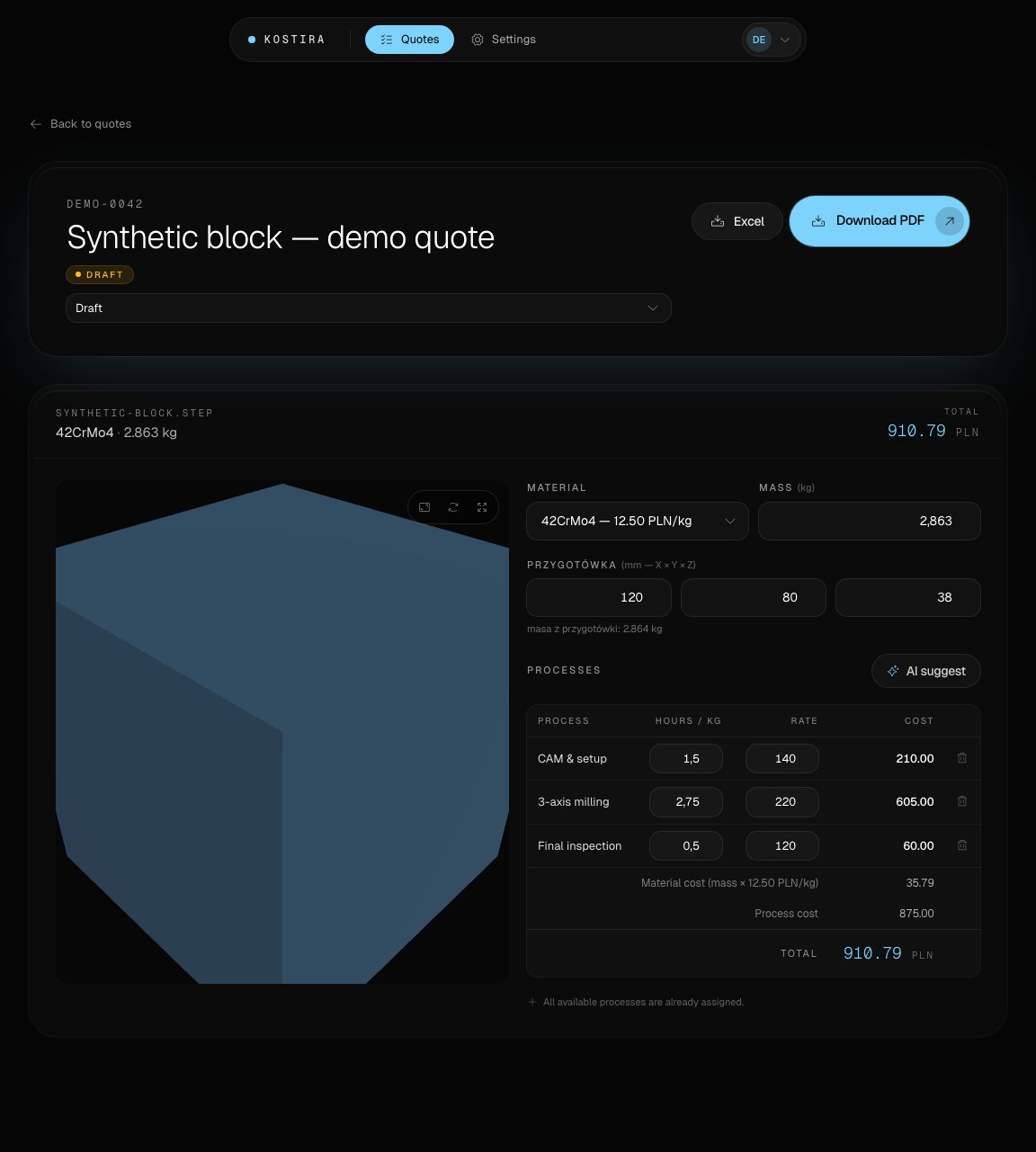
A CNC machining cost estimate should account for stock, setup and run time, process rates, production preparation and any RFQ-specific work. Kostira organizes those inputs around STEP geometry and the costing rules maintained by the shop.
Material
Material cost is not simply finished-part volume multiplied by a unit price. Stock dimensions, allowance, scrap, minimum order quantities and current supplier pricing can all matter. Geometry provides a useful starting point, while the estimator confirms the stock that can actually be purchased and machined.
Processes and hours
A machine or process rate should reflect the annual cost and productive capacity of that resource. The quote then needs reasonable assumptions for programming, setup, machining, inspection and secondary operations. Kostira keeps these items editable instead of hiding everything behind a single total.
Quantity and risk
One-time costs behave differently for a prototype and a repeat batch. Tooling, subcontract work, logistics and technical risk may also need explicit treatment. The shop decides which items apply and how they affect its selling price.
A model to review, not a price guarantee
An estimate is only as useful as its inputs. Kostira does not guarantee accuracy from a CAD file alone and does not replace drawing or manufacturability review. It provides a transparent model that can be corrected, approved and exported.
Choose PLN, EUR, USD, GBP, CZK, MXN or CAD when setting up your workspace. The application has an English interface. Learn more about STEP file inputs. To develop the cost model further, read What drives CNC machining cost and How to calculate a machine hourly rate.
To put numbers on any of this straight away, the free CNC quoting calculators cover the machine hourly rate, the cost of a part across a batch, and material weight — all in the browser, with no signup.